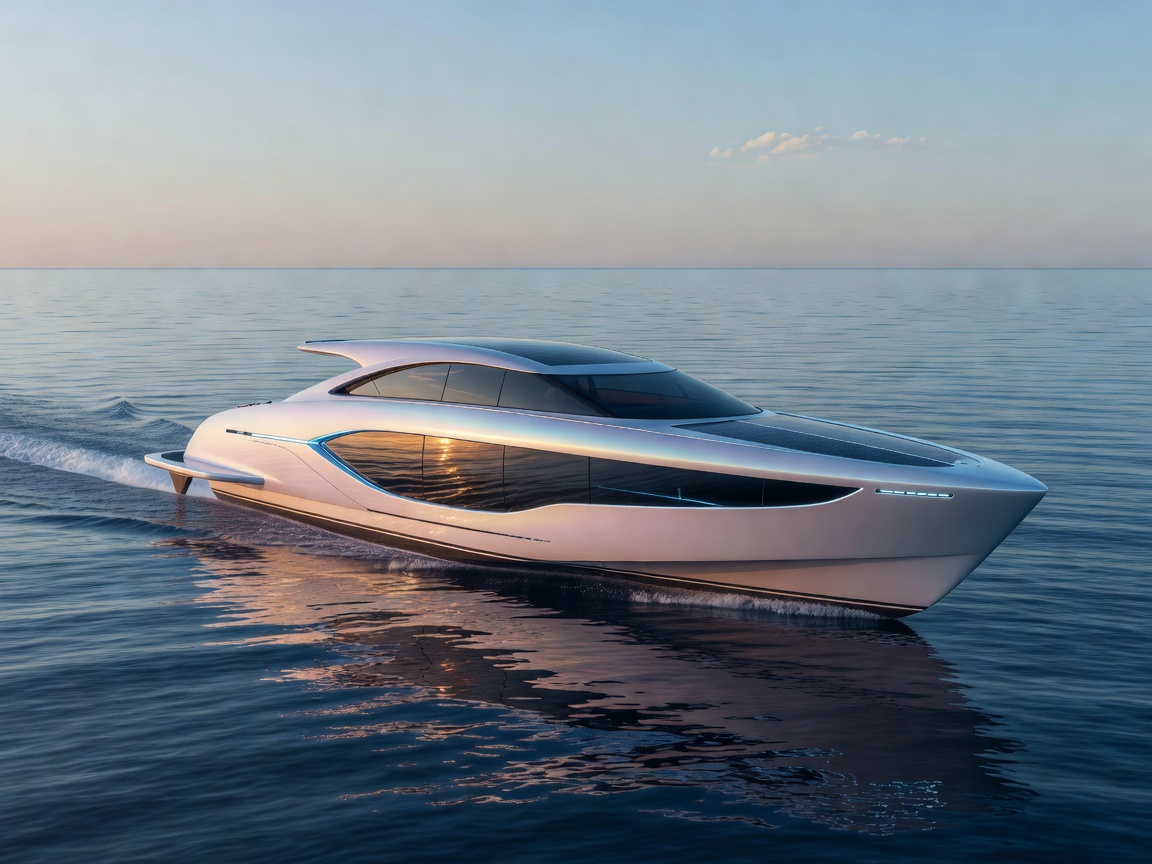
While hybrid-electric architectures utilizing diesel generators and lithium-ion battery banks represent the current state-of-the-art in sustainable yachting, they are transitional technologies. The ultimate goal for the industry is true zero-emission operation, not just in harbor or at anchor, but across transoceanic distances. Achieving this requires moving beyond fossil fuels entirely.
Hydrogen Fuel Cells
Hydrogen holds immense promise as a marine fuel. When processed through a Proton Exchange Membrane (PEM) fuel cell, hydrogen gas reacts with oxygen from the air to produce electricity, with pure water and heat as the only byproducts. This electricity can directly power the vessel's propulsion motors and hotel loads, entirely replacing diesel generators in a series hybrid setup.
However, the volumetric energy density of hydrogen is a significant hurdle. Even when compressed to 350 or 700 bar, hydrogen gas requires vast storage tanks. Liquid hydrogen offers better density but must be stored cryogenically at -253°C, requiring heavily insulated, double-walled tanks that consume massive amounts of interior volume. Consequently, current hydrogen yacht concepts often restrict the technology to powering hotel loads or providing zero-emission coastal cruising capability, while retaining diesel systems for long-range voyages.
Methanol as a Hydrogen Carrier
To overcome the storage issues of pure hydrogen, marine engineers are looking toward green methanol. Methanol is liquid at ambient temperature, making it far easier to store in conventional hull tanks (albeit requiring roughly twice the volume of diesel for the same energy content).
Methanol can be utilized in two ways:
- Direct Combustion: Internal combustion engines can be modified to burn methanol. While this still produces CO2, using "green methanol" (produced using renewable energy and captured carbon) makes the fuel lifecycle carbon-neutral.
- Reformation: A methanol reformer onboard the yacht can extract hydrogen from the liquid methanol on demand. This hydrogen is then fed into fuel cells, providing zero-emission electrical generation without the need for cryogenic storage.
The Infrastructure Challenge
The primary barrier to these futuristic technologies is not onboard engineering, but global infrastructure. Unlike diesel, which is available in every port worldwide, bunkering facilities for hydrogen and green methanol are currently virtually non-existent for recreational vessels.
The transition will likely mirror the automotive industry: a slow build-out of infrastructure in primary hubs (e.g., Monaco, Miami, Dubai), followed by regional expansion. Until that network is robust, the hybrid-electric yacht—capable of utilizing diverse fuel sources and maximizing efficiency—will remain the pinnacle of maritime engineering.