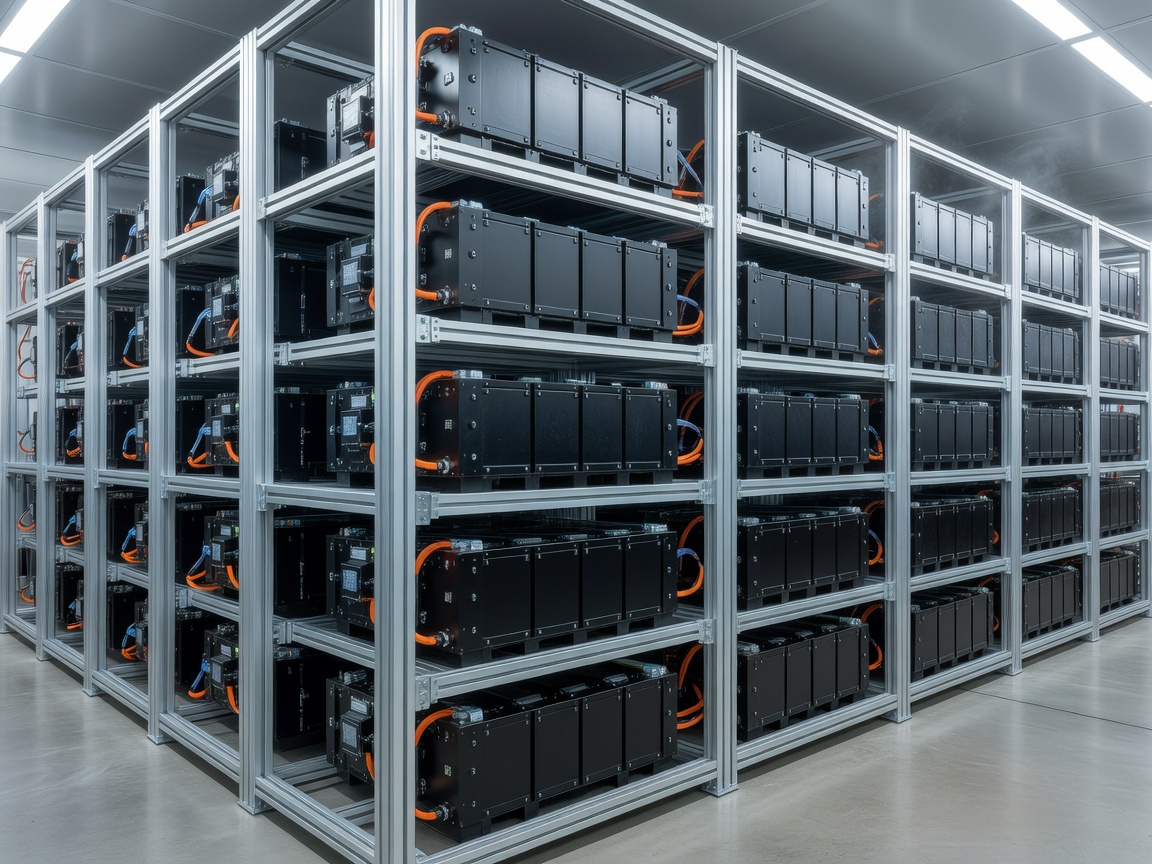
The feasibility of a hybrid-electric superyacht is entirely dependent on its energy storage system (ESS). Unlike automotive applications where weight is the absolute primary constraint, marine environments introduce extreme regulatory requirements regarding thermal runaway, fire suppression, and sustained discharge capabilities under heavy hotel loads.
Dominant Chemistries in Marine Storage
Selecting the correct battery chemistry is a balancing act between volumetric energy density, gravimetric energy density, and safety.
- NMC (Nickel Manganese Cobalt): Traditionally favored for its high energy density, NMC batteries allow shipyards to pack immense amounts of power into smaller footprints. A typical NMC installation can yield substantial weight savings compared to alternatives. However, NMC chemistry poses higher risks regarding thermal runaway, requiring elaborate, heavy, and expensive liquid cooling and fire compartmentalization systems to meet Class Society approvals (e.g., Lloyd's Register, DNV).
- LFP (Lithium Iron Phosphate): LFP has rapidly become the chemistry of choice for many custom yacht builders. While it possesses a lower energy density than NMC—meaning the battery banks are physically larger and heavier for the same kilowatt-hour (kWh) capacity—it is vastly more stable. The risk of thermal runaway is exponentially lower, which simplifies cooling requirements and fire suppression architecture. Furthermore, LFP chemistry supports a longer lifecycle, often exceeding 10,000 cycles with minimal degradation, making it economically superior over a 15-year yacht lifecycle.
The Emerging Role of Solid-State Batteries
Looking ahead, solid-state battery technology promises to revolutionize marine energy storage. By replacing the liquid electrolyte with a solid conductive material, the risk of fire is practically eliminated. Solid-state cells can also theoretically offer twice the energy density of current NMC cells.
While still in the prototype and early commercialization phases, leading marine electrical integrators are already designing battery rooms with modularity in mind, allowing future refits to swap current lithium-ion racks for solid-state modules without requiring structural changes to the hull.
Safety and Class Society Regulations
Implementing an ESS on a superyacht requires strict adherence to maritime regulations. Battery rooms must be independent fire zones with A-60 rated bulkheads. Systems must feature advanced Battery Management Systems (BMS) that monitor the voltage, current, and temperature of every individual cell.
If a cell breaches safe operating temperatures, the BMS must automatically isolate the module and trigger active cooling or suppression systems. Many modern setups utilize liquid cooling plates sandwiched between battery modules, circulating dielectric fluid to maintain optimal operating temperatures (typically 20°C to 25°C), ensuring both safety and longevity of the investment.